
Are your houseplants starting to look sad? If the leaves are yellowing, drooping, or falling off, you might be dealing with a spider mite infestation. These tiny bugs can cause significant damage to plants, especially indoor ones, if left untreated.
Once you know how to treat spider mites, the most important thing to do is act quickly. Quick action is the best way to protect the health of your houseplants.
This post may contain affiliate links. That means if you click on them and buy something, I may receive a small commission. Read my Disclaimer Policy to learn more. As an Amazon Associate, I earn from qualifying purchases.
What Are Spider Mites?
Spider mites are tiny arachnids that feed primarily on the underside of plant leaves. With eight legs like regular spiders, these pests are incredibly small; adult spider mites measure about the size of a pinhead (1/50th of an inch), making them hard to spot with the naked eye.
Nymphs, or baby spider mites, are even tinier and often require a magnifying glass to be seen clearly. Both adults and nymphs use their needle-like mouthparts to pierce leaves and suck out the sap. This feeding behavior damages the leaves, causing them to yellow, discolor, or eventually drop off entirely.
Spider mites are a widespread plant pest found both indoors and outdoors. They can infest a wide variety of plants, including fruit trees, vegetables, and decorative ornamentals. One of the most recognizable signs of their presence is the fine webbing they spin on affected plants. This webbing becomes especially noticeable during a severe spider mite infestation.
When spider mites multiply in large numbers, the webbing intensifies, and the pest population can overwhelm the plant, often resulting in its death. Fortunately, most plants can withstand smaller infestations without significant harm.
How Long Do Spider Mites Live?
Adult female spider mites can live up to 2 months and lay hundreds of eggs throughout their lifespan. The eggs typically hatch in 3-5 days, and the nymphs grow into adults within 7-14 days, depending on conditions like temperature and humidity.
This rapid life cycle means that a new generation of spider mites can develop every week or two, leading to a population explosion and, if ignored, a severe spider mite infestation.
What Do Spider Mite Eggs Look Like?
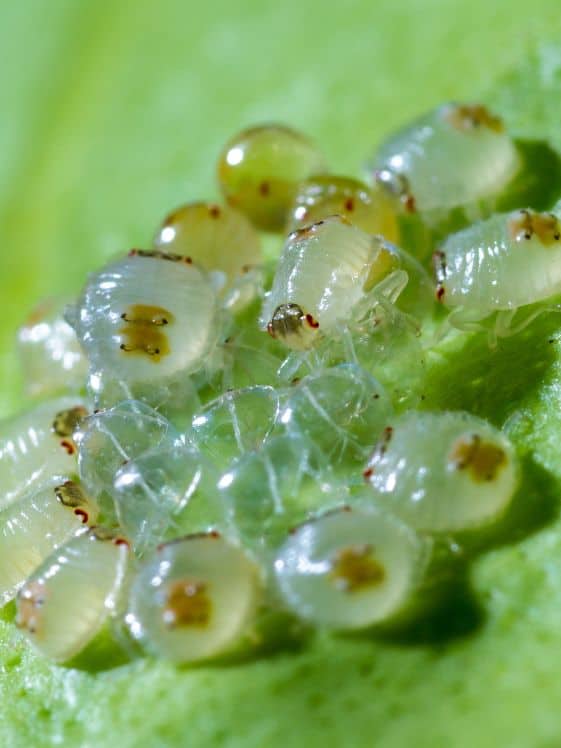
Spider mite eggs are tiny, oval-shaped, and usually pale, ranging from white to yellow or green. You’ll often find these eggs in small clusters on the underside of leaves.
How Do You Get Spider Mites?
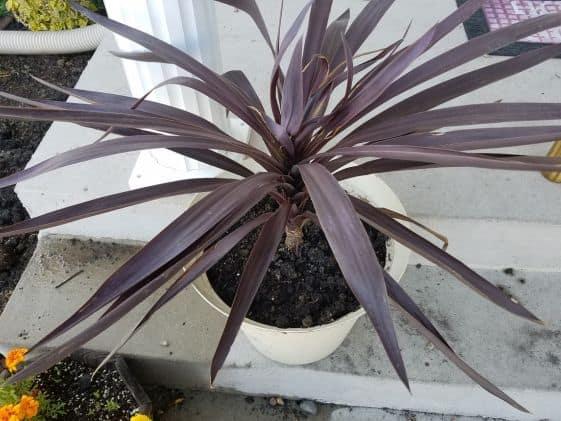
Spider mites can enter your home in several ways:
- New houseplants – regardless of where you get them, any new plants can carry spider mites
- Moving plants outside during warmer months and bringing them indoors in the fall
- Using non-sterile potting soil when repotting plants
- Bringing in cut flowers and vegetables from your garden
- Through open windows or doors, as the wind can carry them inside
Keeping a close eye on your plants and checking leaves for any signs of spider mites or their fine webbing can help prevent a damaging spider mite infestation.
Symptoms Of Spider Mites On Indoor Plants
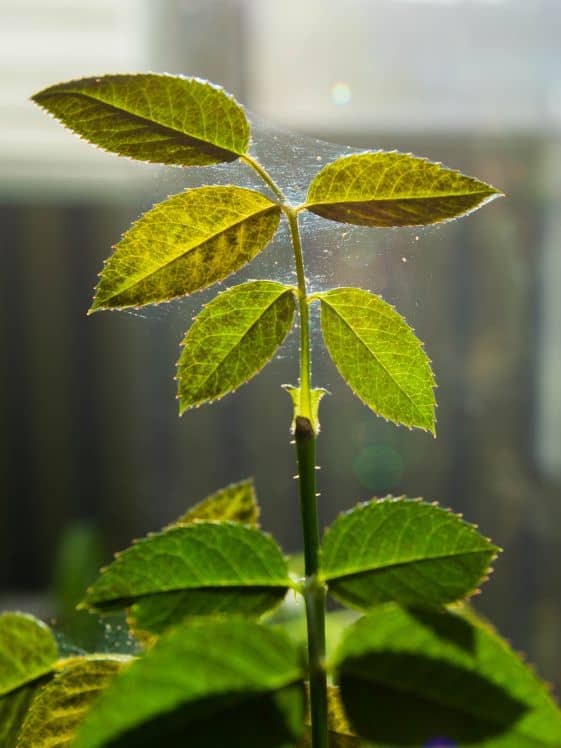
Recognizing the signs of spider mites is crucial to properly caring for your indoor plants. Because spider mites are so tiny, it can be challenging to identify them early on.
The key symptoms to watch for include:
- Yellowing or discoloring of leaves
- Stippled texture on the leaves, giving them a mottled or rough appearance
- Leaves that are dropping off prematurely
- Fine spider webbing around the leaves and sometimes the stems of your plants
Spotting these signs early will help you control spider mites before they cause severe damage to your plants.
How do You Get Rid of Spider Mites on Houseplants?
There are several effective ways to get rid of spider mites on your houseplants and keep them healthy.
Water Spray For Physical Removal
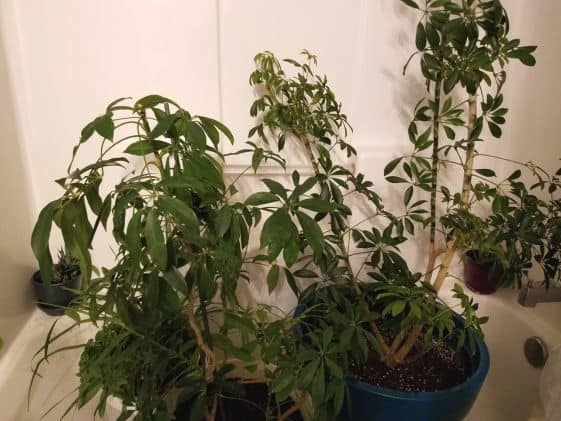
One of the first methods I recommend to control spider mites on plants is using a simple water spray. Spraying your plants with water helps physically remove spider mites from the leaves and can even wash some out of the pot.
You can use a garden hose, spray bottle, or gently run the plant under a faucet (a shower works for larger plants). Be sure to target the undersides of leaves, where spider mites typically hide. Repeating this water spray once a week for several weeks should reduce the spider mite population.
Keep in mind that while a water spray is a useful physical method to control spider mites, it may not eliminate the infestation entirely.
Can You Drown Spider Mites?
According to Hidden Valley Hibiscus, you can drown spider mites by submerging the entire plant and pot underwater for 45 to 60 minutes. However, this method requires caution; using water that’s too hot or leaving the plant submerged too long can damage or kill it. Similarly, if the water is too cold or submersion is too brief, some spider mites may survive. Importantly, the soil and pot must also be submerged to ensure all spider mites are reached.
Prune Infested Leaves
If only a few leaves are infested, removing those leaves can effectively reduce the spider mite population on your plants. Pruning these leaves takes away spider mites and prevents further damage. Always dispose of removed leaves in a sealed bag to avoid spreading spider mites to other houseplants.
Be vigilant and continue monitoring your plants since spider mites often infest other areas beyond the visible spots.
Use Neem Oil As A Horticultural Oil Treatment
Neem oil, a popular horticultural oil, is highly effective for treating spider mites on plants. It disrupts their life cycle, preventing reproduction and gradually eliminating the infestation.
You can buy neem oil ready to use or in concentrate form at garden centers or online. Shake the bottle well before applying, as neem oil tends to separate. Spray the plant thoroughly, focusing on the undersides of leaves where spider mites reside.
Apply neem oil every 5 to 7 days for 3 to 4 weeks to fully treat spider mites. Regular repeat treatments are crucial to prevent the infestation from returning.
Insecticidal Soap For Spider Mite Control
Insecticidal soap is another effective chemical treatment option for spider mites. Available at most garden stores or online, insecticidal soap works by suffocating and killing spider mites on contact.
As recommended by Apartment Therapy, spray insecticidal soap directly on spider mites, making sure to get all leaves completely wet, especially the undersides. Repeat this treatment weekly until spider mites are gone.
Hydrogen Peroxide
Hydrogen peroxide can also be used to help control spider mites. A common mix is 1 cup of 3% hydrogen peroxide with 1 cup of water in a spray bottle. Spray all plant foliage, including leaves, thoroughly. Since hydrogen peroxide doesn’t kill eggs, this treatment must be repeated daily for at least a week with a fresh solution each time.
Always test sensitive plants on a small area before full application to avoid damage.
Beneficial Insects
Biological control is a natural way to treat spider mites by introducing beneficial insects.
Ladybugs are a well-known beneficial insect that consumes spider mites at various life stages. According to Leafy Journal, a single ladybug can eat up to 90 spider mites per day. You can purchase these beneficial insects online or at garden stores and release them near infested plants.
One downside is having live insects in your home, which some people may prefer to avoid.
Diatomaceous Earth For Natural Control
Diatomaceous earth is a natural powder that kills spider mites by damaging their exoskeletons. For this method to be effective, spider mites must come into contact with the powder.
Since spider mites mainly inhabit leaves, you need to apply diatomaceous earth carefully to both the tops and bottoms of leaves. This can be challenging because dusting leaves thoroughly is tricky, but necessary to maximize effectiveness.
Chemical Pesticides For Spider Mite Treatment
Chemical pesticides are a last resort for spider mite infestations. When used properly, pesticides can be effective for treating spider mites and other pests on plants.
Always follow label directions carefully to avoid harming your plants. Many pesticides are broad-spectrum, killing a wide range of insects, which can be helpful if you’re dealing with multiple pests. However, pesticides can also pose risks to people, pets, and beneficial insects, so use them with caution.
If you prefer to avoid chemical pesticides, consider the other treatment methods outlined above.
When To Toss The Plant
In severe cases where spider mites have taken over, it might be best to throw out the infested plant. If the plant is struggling or the infestation is overwhelming, place the entire plant, soil, and pot inside a sealed garbage bag and remove it from your home immediately.
If you plan to keep the pot, clean it thoroughly with bleach and hot water before reuse. Remember to inspect your other houseplants regularly to control spider mites and prevent future infestations.
How To Prevent Spider Mites On Indoor Plants
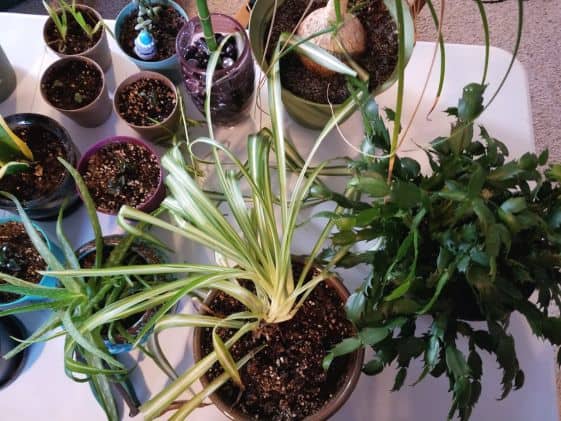
The best way to prevent spider mites from damaging your indoor plants is to stop them before they establish an infestation.
Quarantine New Plants
When you bring a new plant home, it’s important to quarantine the plant for a few weeks. This isolation helps prevent spider mites and other pests from spreading to your existing plants.
During this quarantine period, regularly inspect plants for signs of spider mites or other pests. Check the leaves closely, looking for any tiny webs or specks that might indicate their presence. If you want to inspect plants more closely, try holding a white sheet of paper under suspicious areas and gently shaking the leaves to see if any mites fall onto the paper.
If you find evidence of spider mites during inspection, treat the plant while it remains in quarantine. Once a plant has been spider mite free for several weeks after thorough inspections, it’s safe to add it to your collection.
Proper Watering And Humidity
Maintaining proper watering is crucial to preventing spider mites on your plants. Spider mites thrive in dry conditions, so keeping the soil appropriately moist helps reduce their chances of a spider mite infestation.
Plants that are stressed from dryness become more vulnerable, providing ideal conditions for spider mite populations to multiply rapidly and harm your plants. Avoid letting the soil dry out completely, but be cautious not to overwater.
Another effective way to increase humidity and protect your plants is by misting them regularly. You can also place a pebble tray under the pots or use a humidifier nearby to boost humidity levels. Higher humidity makes it more difficult for spider mites to thrive and reproduce.
Systemic Miticide For Spider Mites
Systemic miticides are absorbed by plants and kill spider mites when they feed on infected leaves. These treatments are most effective as a preventative measure rather than only after a spider mite infestation becomes severe.
Using a systemic miticide regularly can help prevent spider mites from taking over your plants. Make sure to choose a product specifically labeled as a miticide, since not all systemic pesticides target spider mites. Check the label carefully for a list of pests it controls to ensure it will work against spider mites.
My Preferred Spider Mite Treatment
When I treat spider mites on my plants, I like to use a combination of methods.
First, I spray the spider mites off the plants with water, either in the shower, outside depending on the weather, or even in the kitchen sink if the plant is small enough.
Next, I apply neem oil, carefully coating both the topside and underside of all the leaves.
After that, I leave the plants alone for about a week before repeating the process.
Typically, after 3 to 4 treatments, I pause and monitor the plants closely for any signs of a spider mite infestation.
Before starting this shower and neem oil treatment, I remove any plants that appear severely damaged.
Some people claim neem oil won’t effectively treat spider mites, but in my experience, this routine helps control spider mites well enough that I don’t have to treat the plants again until I unintentionally bring spider mites back into my home by introducing new plants or bringing plants indoors in the fall.
The main challenge with neem oil is that it must be reapplied every 5 to 7 days for 3 to 4 weeks to target all life stages of the spider mites.
If you miss any stages, the spider mites will undoubtedly return, so consistency is key to controlling spider mites successfully.
FAQ
Do ants eat spider mites?
Yes, ants will eat spider mites.
This behavior can benefit outdoor plants but is less effective for indoor plants.
What temperature kills spider mites?
Spider mites can survive across a broad temperature range. According to HGIC Clemson, they are most active between 48°F and 111°F.
Do spider mites die in the cold?
Spider mites do not die in cold temperatures, though they become less active. In colder regions, outdoor spider mites often overwinter in the soil to survive.
Do spider mites live in soil?
Spider mites primarily reside on plants where their food source is, commonly feeding on leaves. However, in colder climates, they can survive by overwintering in the soil.
Does bleach kill spider mites?
Bleach will kill spider mites but may not be effective against their eggs. It’s best applied to empty pots that might have been exposed to spider mites, as bleach can harm live plants.
How long can spider mites live without plants?
Spider mites can survive without plants for 10 to 12 days under optimal conditions. After this period, they begin to die off.
Do ladybugs eat spider mites and eggs?
Yes, ladybugs consume spider mites at all stages of their life cycle, including eggs, larvae, nymphs, and mature mites.