
These pesky little bugs love to live in the soil of your houseplants. If you have ever dealt with them, you already know how frustrating they can be. They fly around your face and make it hard to enjoy your plants.
The good news is that they are fairly easy to control. The not-so-good news is that getting rid of them completely can take some effort.
This post may contain affiliate links. That means if you click on them and buy something, I may receive a small commission. Read my Disclaimer Policy to learn more. As an Amazon Associate, I earn from qualifying purchases.
What are Fungus Gnats?
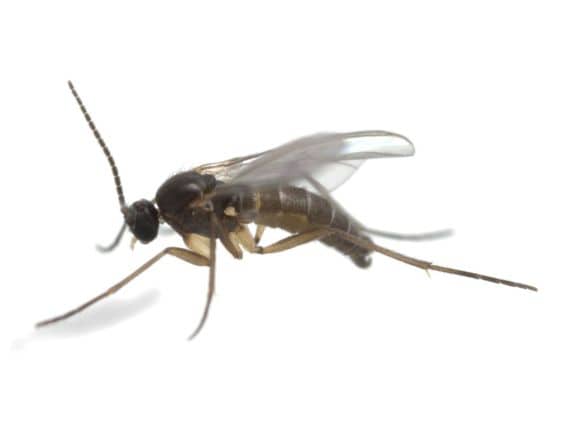
Fungus gnats are small, dark-colored flies with long legs and wings. Adults are tiny, usually no more than 1/8 of an inch long. You will usually find them in damp, poorly drained soil.
Fungus Gnats or Fruit Flies?
It can be tricky to tell the difference at first because they look similar. Their behavior is the key.
If most of the flies are hanging around your houseplants, you are likely dealing with fungus gnats. If they are mostly in your kitchen, especially near fruit, they are probably fruit flies.
How do Fungus Gnats Get in Houseplants?
Fungus gnats usually come into your home through new plants or potting soil. Unfortunately, any brand of soil can contain them, including mixes with compost.
I have personally had this happen multiple times with different brands, so it is not uncommon.
How Fast Do Fungus Gnat Populations Grow?
They multiply quickly. Adult gnats can lay up to 200 eggs, which hatch into larvae that grow fast. In just a few weeks, you can have a full-blown infestation.
It helps to catch them early, before new generations start laying more eggs.
Are Fungus Gnats Harmful to Plants?
Most of the time, they are more annoying than harmful. However, if the infestation gets bad enough, they can start causing damage.
The larvae feed on decaying organic matter and fungi in the soil, which does not harm the plant. But in large numbers, they may begin feeding on roots, which can cause damage.
Are Fungus Gnats Harmful to People?
No. They are not harmful to people or pets, just annoying. They are attracted to light and tend to fly around your face or even into drinks. Thankfully, they do not bite or sting.
How to Get Rid of Fungus Gnats
There are several ways to deal with fungus gnats. Some are simple, while others take a bit more effort.
Hydrogen Peroxide
Mix one part hydrogen peroxide with four parts water, then water your plant with the solution. Make sure the soil is fully saturated and allow excess water to drain out.
This works by killing eggs and larvae in the soil.
There are a couple of downsides. First, it leaves the soil very wet, which can stress some plants. Second, it can kill beneficial bacteria in the soil, which may affect plant health.
Let the Soil Dry Out
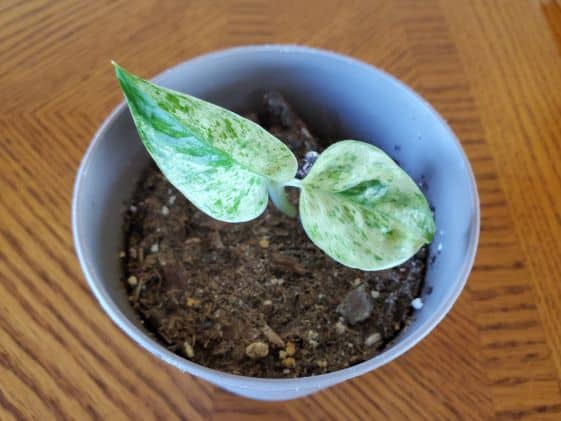
This is one of the most effective methods. Fungus gnats need moist soil to survive and reproduce.
Let the soil dry out completely. Then wait at least three days before watering again, if your plant can tolerate it. Eggs and larvae can survive briefly in dry soil, so giving it extra time helps.
If you consistently let the top two to three inches of soil dry between waterings, you will see a big reduction in gnats.
Also, make sure your pots have drainage holes so the soil does not stay wet for too long.
Repot the Plant
Repotting can help remove larvae from the soil. Always use fresh potting mix and a clean pot.
That said, even new soil can sometimes contain fungus gnat eggs, so this method is not foolproof.
Yellow Sticky Traps
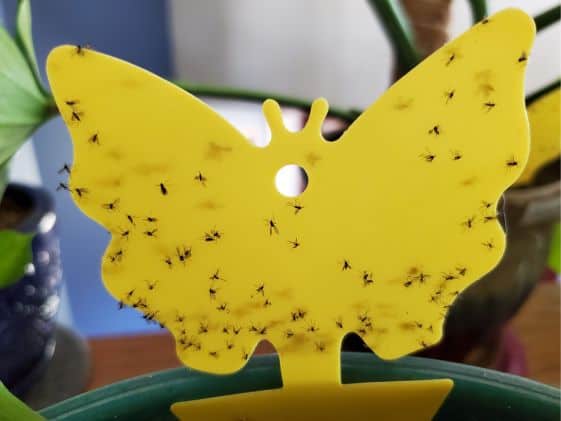
This is one of my favorite methods. Yellow sticky traps catch the adult gnats and help reduce the population quickly.
Just a heads up, if you have pets. My cats love to mess with these and have run around with traps stuck to them more than once.
To use them, peel off the backing and place the trap in the soil near your plant. You will usually see results within minutes when there are high numbers of gnats.
Most traps last a couple of months or until they are covered in bugs, dust, or, in my case, cat fur.
Cinnamon
Sprinkling cinnamon on the soil can help because it acts as a natural fungicide. It reduces the fungus that larvae feed on.
Apply a visible layer on top of the soil and reapply every couple of weeks. During this time, it is best to water from the bottom to avoid mold forming on the cinnamon.
Apple Cider Vinegar Traps
Fill a small container with about a quarter to half an inch of apple cider vinegar. Add a few drops of dish soap and stir.
Cover the top with plastic wrap and poke small holes in it. Place it near your plant.
The gnats are attracted to the smell, fall in, and cannot escape. Replace the mixture every few days.
This also works well for fruit flies.
Neem Oil Soil Drench
Neem oil is a natural insecticide. Mix one tablespoon of neem oil and one teaspoon of dish or castile soap with one quart of warm water.
Use it right away, since neem oil breaks down after mixing. Apply it to the soil to target larvae.
Raw Potato
Place slices of raw potato on the soil, cut side down. This can draw larvae out of the soil.
Replace the slices every few days until you no longer see larvae. I have not tried this myself because my pets would likely make a mess trying to get the potato.
Mosquito Bits
Mosquito bits contain Bti, a bacteria that kills fungus gnat larvae but is safe for people and pets.
You can sprinkle them on the soil or soak them in water. To make a solution, mix a quarter cup of bits into one gallon of water, let it sit for about 30 minutes, then remove the bits.
Use the water within two days and repeat weekly for three weeks.
Diatomaceous Earth
Sprinkle a thin layer of food-grade diatomaceous earth on the soil after watering. It dehydrates larvae on contact.
Reapply as needed and avoid breathing in the dust.
Beneficial Nematodes
These microscopic organisms target and kill larvae in the soil. They are applied with water and are safe for plants and pets.
Follow the instructions on the package for best results.
Baking Soda
Baking soda is sometimes used to control fungus in soil, but it is not very effective against fungus gnats directly. It may help slightly by reducing fungal growth.
Insecticides
For severe infestations, insecticides can help. Most will kill adult gnats but may not affect eggs or larvae.
Always read and follow label directions. If you have pets or small children, safer methods are usually a better choice.
How to Stop Fungus Gnats from Spreading
If one plant has fungus gnats, separate it from your other plants. These insects are weak fliers and tend to stay close to their source.
Keep a close eye on your other plants. Check the soil and leaves regularly for signs of gnats or larvae.
How to Prevent Fungus Gnats
Prevention is the best long-term solution.
Don’t overwater
Overwatering is the main cause of fungus gnats. They thrive in damp soil.
Let the top inch of soil dry out between waterings. This simple habit makes a big difference.
Water Plants from the Bottom
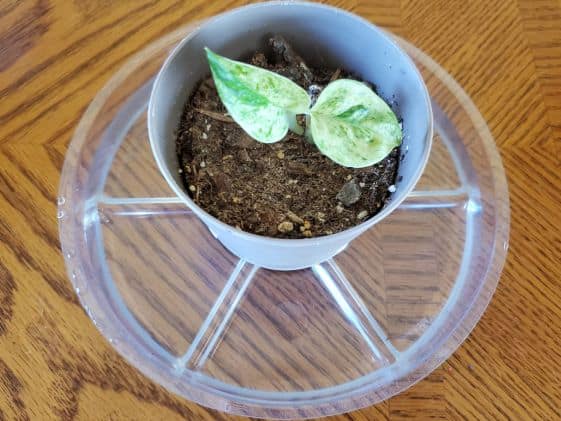
Place your plant in a shallow container of water and let it absorb moisture from the bottom.
This keeps the top layer of soil drier, which makes it less attractive to gnats.
Use Soil Covers
Adding a layer of sand or gravel on top of the soil can block gnats from laying eggs.
You can also use insect-proof netting. Both options still allow air and water to reach the roots while keeping gnats out.
With soil covers, bottom watering is a must.
Which Method is the Most Effective?
In my experience, yellow sticky traps are the most effective method, mostly because they are so easy to use.
There is no mixing, soaking, or prep work. You just place a trap in the pot and leave it alone. Check it occasionally to make sure it is not too full or, if you have pets like I do, that it has not been stolen.
I now add sticky traps to my plants every time I repot and replace them as needed. I rarely have fungus gnats flying around anymore, although I still notice the occasional one on my plants.
Final Thoughts
Completely getting rid of fungus gnats is unlikely if you plan to keep houseplants.
That said, you can absolutely get them under control. It takes a bit of consistency and patience, but the results are worth it.
Stick with a few reliable methods, stay on top of your watering habits, and you should see a big improvement.
Good luck tackling your fungus gnat problem. With the right approach, you will have it under control soon.